Development application

Compartmented PE foam tray for drone delivery and transport

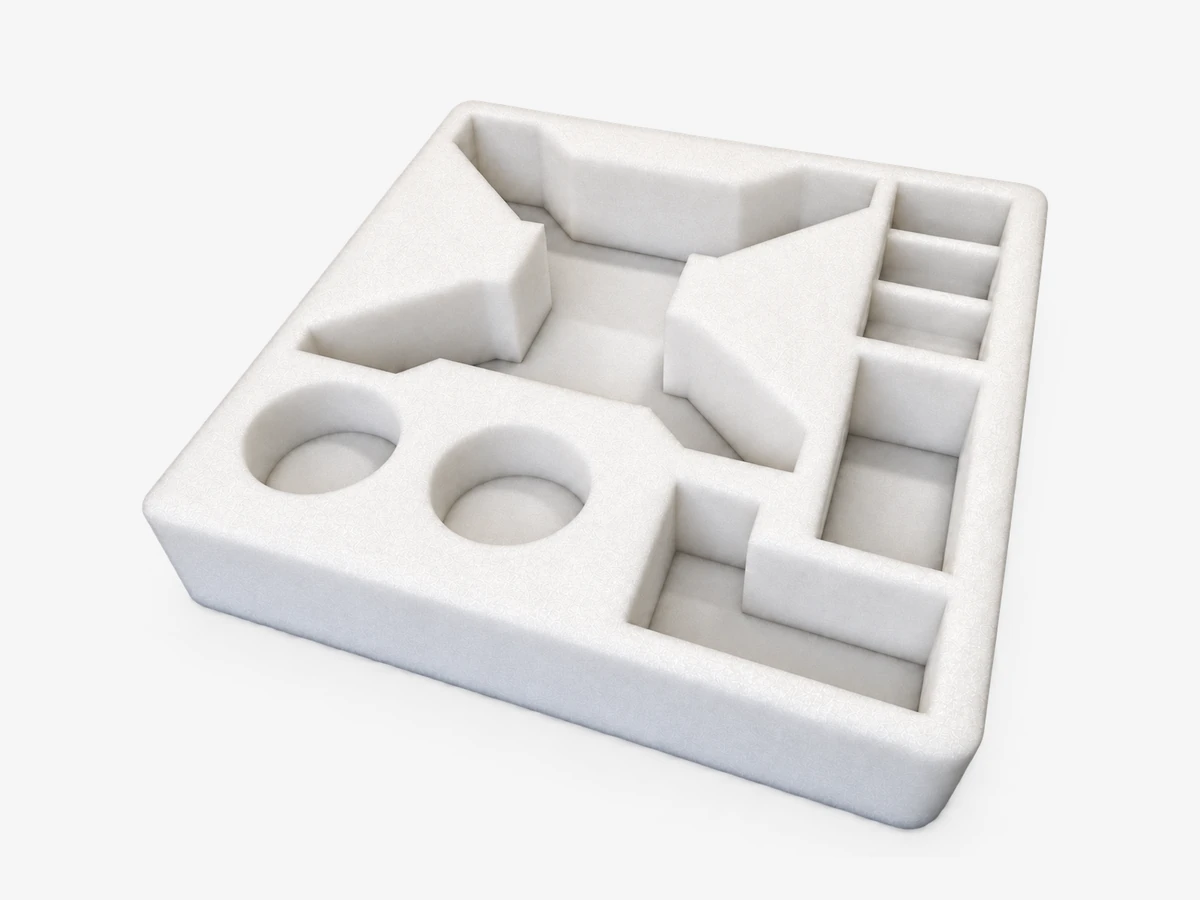
A compartmented PE foam tray developed for drone delivery and transportation, using foam at 20 kg/m³. FFG assisted material selection, reviewed and modified the design for manufacturing, and supported several rounds of rapid CNC blade prototyping. The tray is assembled from glued die-cut layers.

Discuss a similar application

Documented specification

Intended application
Drone delivery and transportation
Material / density
PE foam — 20 kg/m³
FFG contribution
Design review and modification for manufacturing (DFM); material selection assistance
Prototyping
CNC blade cutting through several rounds
Assembly
Die-cut foam layers glued together
Reuse
Intended for a few uses; no tested cycle count specified
Supply configurations
Tray alone, with a carton or plastic box, in a soft goods bag, or in a rigid transport case

Compare foam materials and specifications ↗

Adapted application illustration: white PE foam compartment tray with two circular recesses, smaller slots and partitioned compartments, viewed at an oblique angle.
Adapted application illustrationCompartmented tray shown in an oblique view. The recesses and compartment layout are adapted for presentation and do not show the exact customer design.

A compartmented format for delivery and transport

This example illustrates a compartmented tray format for drone delivery and transportation applications. FFG reviewed and modified the design for manufacturability (DFM) and assisted with the selection of PE foam at 20 kg/m³. For your project, define the items to accommodate, access requirements and internal container dimensions with FFG.

Quick iteration with CNC blade prototypes

Several rounds of prototypes were made using CNC blade cutting, supporting quick design iterations during development. This example demonstrates FFG’s ability to progress through multiple prototype rounds rapidly. For a similar tray, agree the layout, prototype review points and schedule around your own equipment and requirements.

A glued assembly of die-cut layers

The tray construction uses die-cut foam layers glued together. The prototype route is CNC blade cutting; the layered assembly combines die-cutting and adhesive bonding. FFG can review the layer arrangement and manufacturing scope for a new compartmented insert.

Packaging options and limited reuse

FFG can supply a foam tray on its own, with an associated carton box, in a simple plastic box, in a soft goods bag or in a rigid transport case comparable to a Pelican-style case. Multiple insert layers can be combined in the same carton if needed. The application is intended for a few uses; no tested reuse-cycle count or transport performance result is specified. Discuss the tray and its surrounding packaging together for a similar application.

Build a useful enquiry

Share the part or assembly drawing, overall dimensions, material or grade if known, interfaces, quantities and timing. Include the requirements you need to validate.

Discuss a similar application