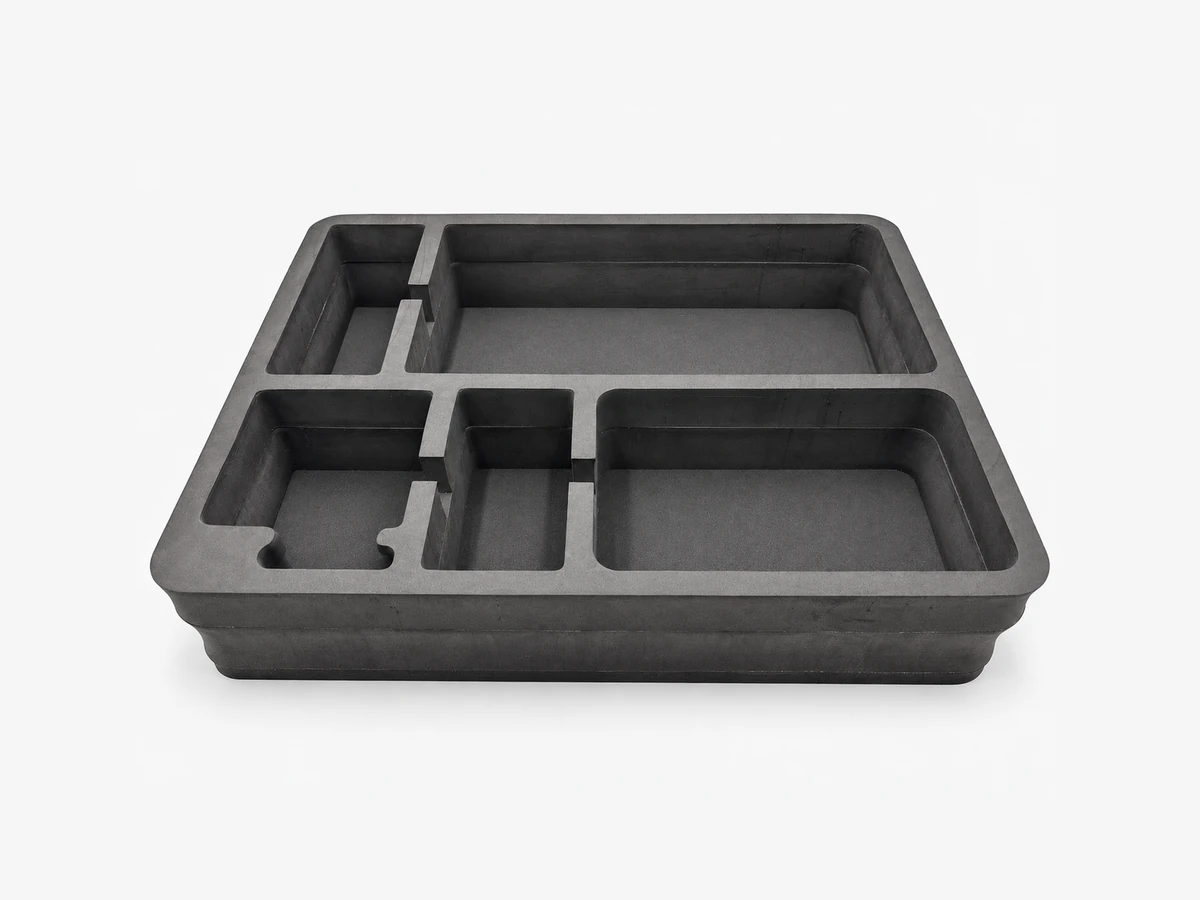
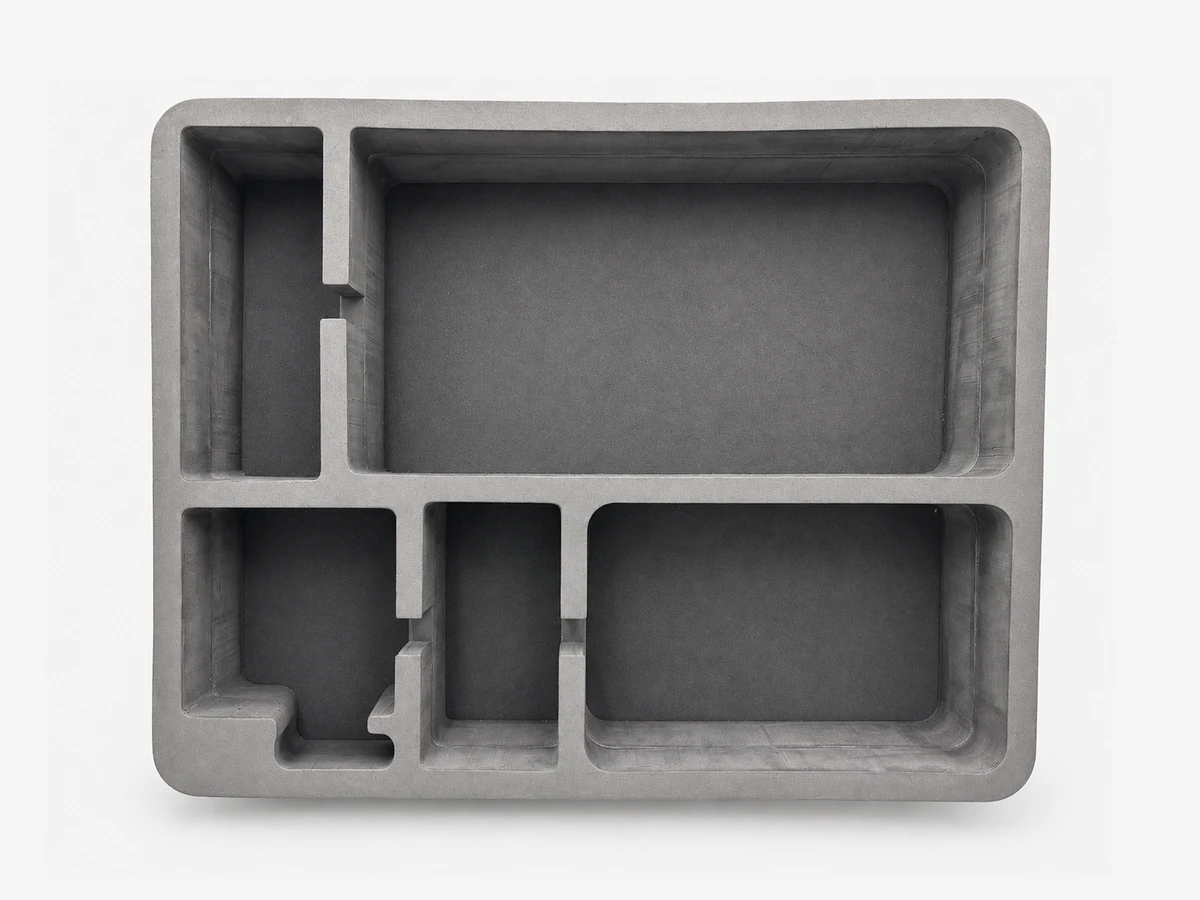
One layout for a complete equipment set
Develop a field kit around electronic instruments and their cables, a drone and its accessories, or tools for installation and maintenance. Dedicated compartments can separate the main equipment from smaller items and make the kit easier to organize. Each layout is defined around your equipment dimensions, weight and handling needs; the illustrated arrangement is one development starting point.
Finger access between slots
Cutouts between adjacent slots provide space to grip and lift equipment from its compartment. Their position and size can be developed alongside the fit of each item, including clearance for cables, handles and gloved use where required. Check access with the actual equipment during prototype fit review.
Shock cushioning and equipment separation
Shock protection is a design objective for this application. Develop the foam thickness, contact areas and fit around equipment weight, fragile features and expected handling conditions. The compartments are intended to limit movement and contact between items. Agree the required drop, impact or vibration checks for the complete packed assembly; no protective rating or completed test result is established for this example.
Light thermal insulation
Light thermal insulation can be explored as an additional requirement. General manufacturer guidance identifies EVA foam uses in insulation and packaging; performance depends on the selected grade, foam thickness, enclosure and exposure. Define the expected temperatures and duration, then assess the complete assembly. This example has no specified thermal rating or demonstrated temperature-holding time.
Die-cut layers assembled by bonding
The confirmed construction uses EVA foam at 35 Shore C and 70 kg/m³, with die-cut layers glued together. Layer profiles define the compartments and finger-access openings, while the assembly is developed to suit the required depths and outer envelope. For a similar project, agree layer thicknesses, alignment, adhesive compatibility and the fit with the surrounding container.
Integration into bags, boxes and protective cases
The insert can be developed for an existing standard bag, plastic box or protective case, or alongside a custom container. Define the usable internal dimensions, lid clearance and how the insert is retained. For a textile bag, FFG Bags can support the surrounding bag development. Review equipment access, carrying orientation and the protection requirements as one assembly.