Prototype fit, pilot approval and delivery
The prototype underwent a static fit check. The pilot received approval following field testing, and the project subsequently reached production and delivery. The test methods, conditions and detailed results have not been disclosed.
From customer CAD to a refined foam design
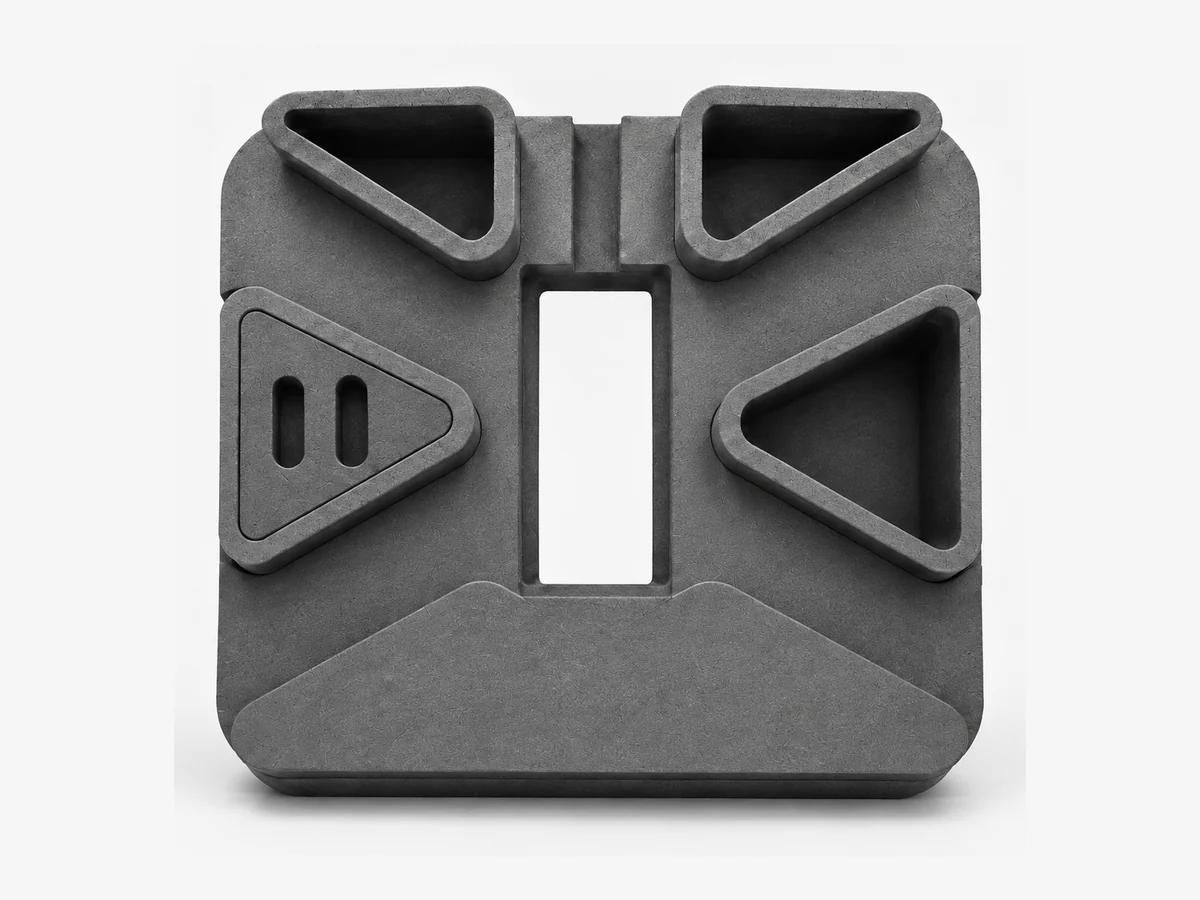
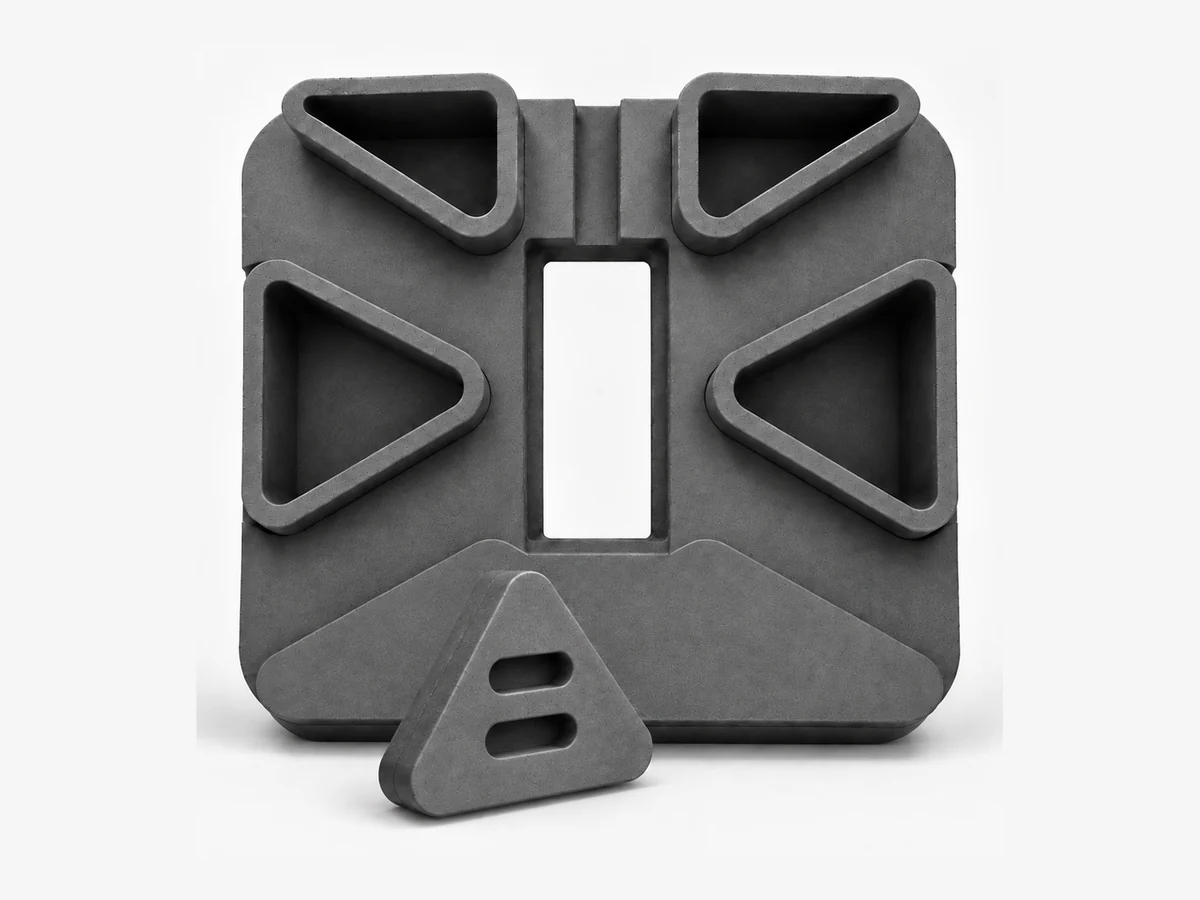
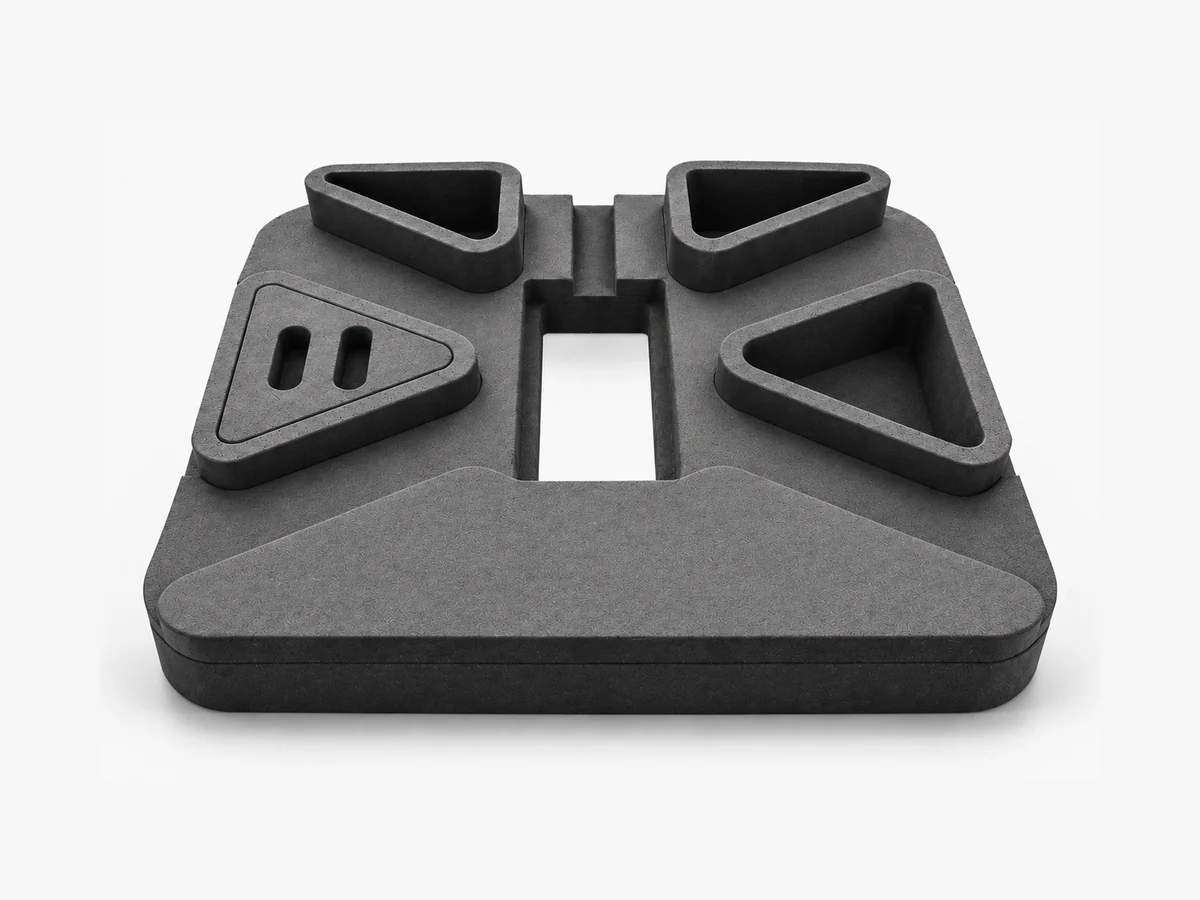
The customer supplied the initial 3D and 2D CAD files. FFG managed their integration and refined and updated the foam design in collaboration with the customer. This example illustrates how FFG can develop a foam component from an existing customer definition.
Die-cut layers, adhesive bonding and CNC finishing
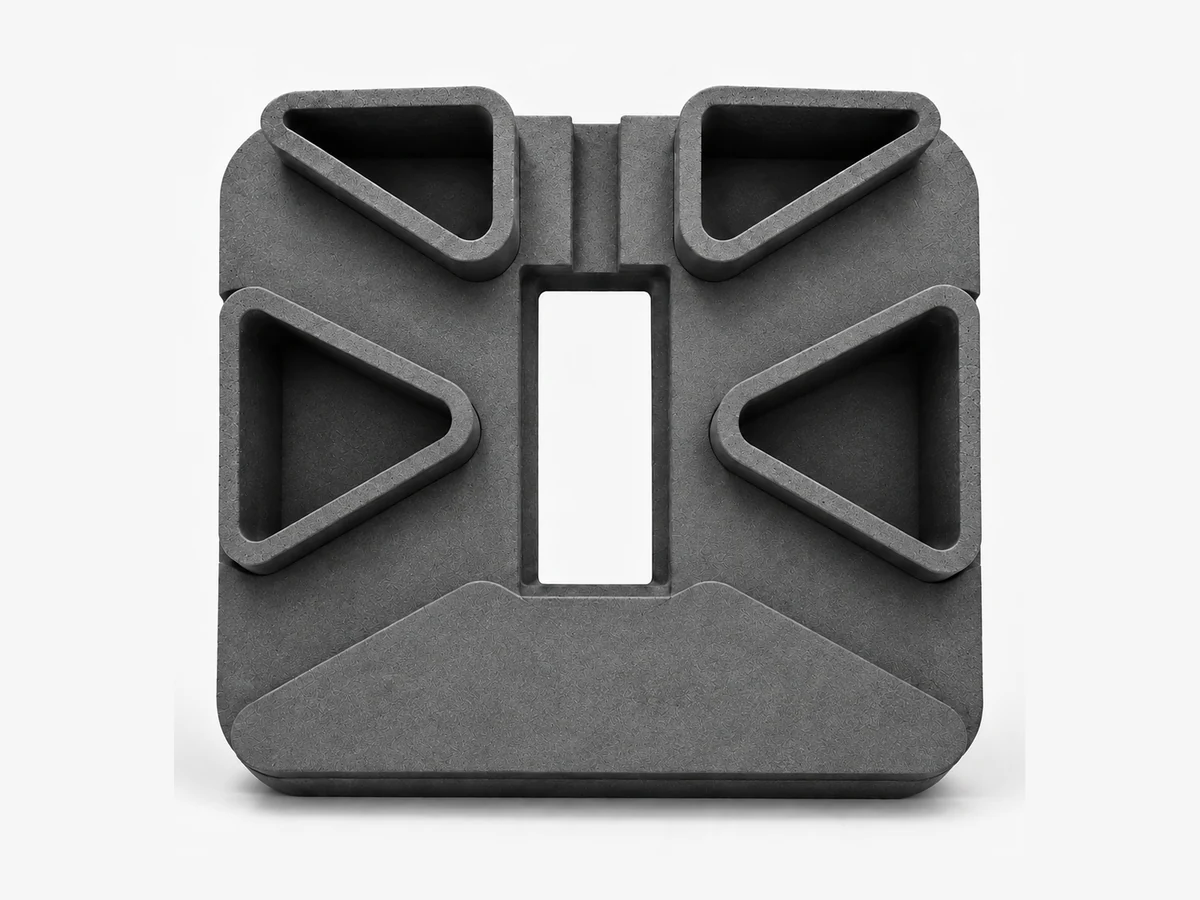
The EVA foam layers are die-cut and glued together to form the block. Additional CNC machining completes the fine details. This manufacturing route combines layered foam construction with machined detail finishing.
Bag, backpack or rigid protective transport case
The foam block can be integrated into a carrying bag or backpack, with textile development support from FFG Bags, or into a rigid protective transport case. For a similar application, define the drone configuration, internal container dimensions, closure clearance and access needed to insert and remove the equipment.
Standalone support and work-in-progress handling
A standalone block can be developed for customer integration or used as a drone stand and work-in-progress (WIP) support during production or maintenance. The support points, access to the drone and handling requirements should be defined for the intended task.
General EVA material guidance
EVA is an ethylene-vinyl acetate copolymer. Manufacturers offer lightweight, flexible and resilient closed-cell EVA foams for packaging and padding, with low water absorption in the grades described by the sources below. These are material-family characteristics, separate from this project’s specification. For a similar design, confirm the exact grade, hardness scale, compression response, recovery after sustained loading and temperature limits with the supplier, then validate the complete foam and container assembly for its intended use.